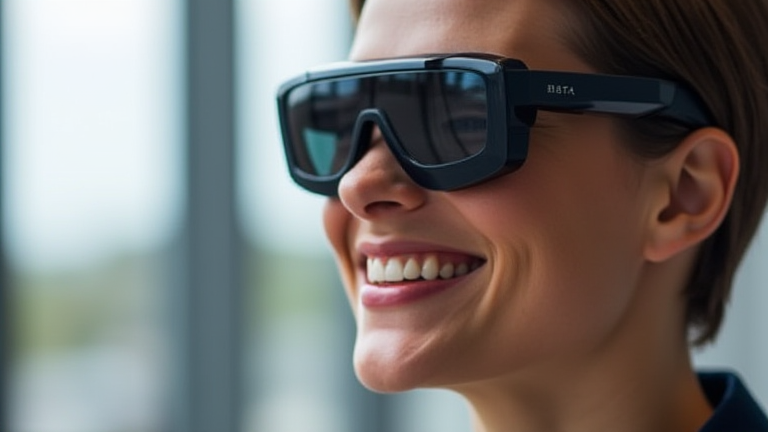
TL;DR: No, AR glasses cannot fully replace smartphones today as they still rely on phones for processing power and connectivity. However, they are rapidly evolving into essential companions that augment the mobile experience with immersive spatial computing capabilities.
The Current Landscape: Smart Glasses vs. Display Glasses
The debate between Meta Ray-Ban and Xreal Air highlights a fundamental divergence in augmented reality strategy. Meta’s Ray-Ban Smart Glasses focus on passive audio, high-quality cameras, and AI-driven interactions, effectively turning the wearer’s field of view into a first-person camera. In contrast, Xreal Air acts as a lightweight, high-resolution display monitor that projects virtual screens into the user’s periphery. While Meta aims to integrate AI directly into daily life, Xreal targets productivity and entertainment, allowing users to extend their laptop or smartphone screen into a massive virtual display. Both devices represent significant strides in making wearable technology less intrusive and more socially acceptable, moving away from the bulky headsets of the past.
If you want to dig deeper, check out our guide on SEO Tutorial: Step-by-Step Guide to Boost Your Rankings.
Technical Specifications and Limitations
Meta Ray-Ban devices feature dual 12-megapixel cameras, open-ear speakers, and a battery life of approximately four hours on a single charge. The latest update introduces enhanced AI features that can describe what the user sees, translate foreign languages in real-time, and answer contextual questions. However, the device lacks a visual display, meaning all interaction is auditory or requires looking at a companion smartphone app. Xreal Air, conversely, offers 1920×1080 resolution per eye with a 500-nit brightness level and a 50-degree field of view. It supports 120Hz refresh rates and connects via USB-C to various devices. The primary limitation for Xreal is its lack of built-in computing power; it is strictly a display output, requiring a host device for all processing. Neither device currently offers standalone operational independence, which remains the biggest hurdle in replacing the smartphone entirely.
Industry Impact and Future Trajectories
The industry impact of these devices is profound, signaling a shift from “smartphone-centric” to “spatial-centric” computing. Meta’s approach is driving massive adoption of AI wearables, with millions of units sold, proving that consumers want tech that does not block their view of the world. This success pressures competitors like Apple and Samsung to accelerate their own AR initiatives. Xreal’s model appeals to the remote work and gaming demographics, demonstrating that portable virtual monitors are a viable market. The convergence of these two philosophies suggests a future hybrid device: one that combines Meta’s always-on AI sensors with Xreal’s high-fidelity display. As battery technology improves and on-device neural processing becomes more efficient, the dependency on a tethered smartphone will likely diminish. The next three years will be critical, as manufacturers race to integrate better SLAM tracking, longer battery life, and autonomous AI capabilities. Until then, these glasses serve as powerful extensions of the smartphone, not replacements. The true replacement will likely arrive only when these devices achieve full standalone autonomy, allowing users to leave their phones at home while maintaining full digital connectivity and productivity.
FAQ
Q: Can I use Xreal Air without a smartphone?
A: No, Xreal Air requires a connection to a host device such as a smartphone, tablet, laptop, or console to display content; it has no internal operating system.
Q: Does Meta Ray-Ban have a screen display?
A: No, Meta Ray-Ban Smart Glasses do not have a visual display; they function primarily as a smart camera and audio device with AI features.
Q: Which device is better for gaming?
A: Xreal Air is generally better for gaming due to its high-resolution visual display, while Meta Ray-Ban is limited to audio-only gaming experiences.
Leave a Reply