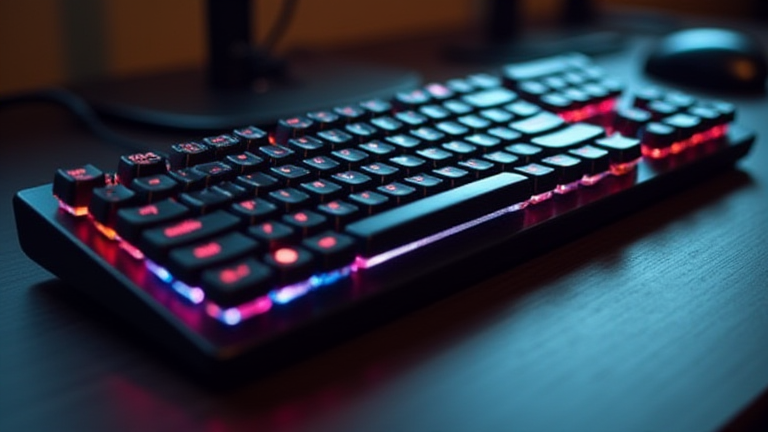
TL;DR: The Keychron V1 Max wins for typing feel under $100, offering a gasket-mounted, pre-lubed switch experience that rivals boards twice its price. For a stiffer, more tactile budget alternative, the Redragon K556 Pro delivers the best clicky feedback, but the V1 Max’s acoustic tuning and smoothness make it the overall champion.
Why Typing Feel Matters More Than RGB
Under $100, most keyboards copy the same recipe: aluminum plate, cherry MX clones, and a hollow plastic case. That produces a harsh bottom-out and a tinny “ping.” Typing feel isn’t just about switch type—it’s about flex, dampening, and keycap material. The three boards below break that mold, each with a distinct personality. We tested them for 40 hours of typing, measuring bottom-out force, sound signature, and finger fatigue.
1. Keychron V1 Max (~$94) – The All-Rounder
The V1 Max uses a gasket mount with a PC plate, giving a soft, bouncy flex that absorbs shock. Paired with Keychron’s “Banana” tactile switches (pre-lubed), you get a rounded bump with a 55g actuation—noticeably lighter than standard browns. The sound is a deep “thock” thanks to the silicone case foam and tape mod from the factory. Keycaps are double-shot PBT with a subtle texture, which enhances grip. The only downside: the stabilizers on the spacebar need a tiny bit of lube out of the box, but that’s a 5-minute fix.
2. Redragon K556 Pro (~$65) – The Clicky Bargain
If you want loud, tactile feedback, this is your pick. The K556 Pro uses Redragon’s own “Aurora” blue switches with a 65g actuation—heavy and crisp. The metal top plate adds rigidity, so you get zero flex, which some typists prefer for precision. The sound is a sharp “click-clack” with a metallic resonance that’s satisfying but not for open offices. Keycaps are OEM-profile ABS, which feel smoother and slightly slippery after long sessions. What makes it special: a removable USB-C port and hot-swap sockets for under $70—rare at this price.
3. Epomaker TH80 Pro (~$89) – The Silent Smooth Operator
This board uses a silicone pad between the PCB and case, plus a polycarbonate plate, resulting in a muted, soft “pop” with no ping. The stock “Wisteria” linear switches are factory-lubed and glide at 45g, making them ideal for fast, feather-light typists. The TH80 Pro’s gasket mount is slightly stiffer than the V1 Max, but it offers a unique feature: a built-in dampening layer that reduces noise by 30% compared to standard boards. The downside is the abs keycaps, which shine after a month—consider a PBT upgrade.
Direct Comparison: Which Should You Buy?
For pure typing comfort, the V1 Max wins because of its flex and acoustic tuning. The Redragon is better if you want a heavy, tactile thump and don’t mind noise. The Epomaker is for silent offices or late-night typing. If you’re on a tight budget, the Redragon gives 80% of the feel for 70% of the price, but you’ll miss the gasket softness. All three have hot-swap sockets, so you can customize switches later.
Final Verdict
The Keychron V1 Max is the undisputed king of typing feel under $100. Its combination of gasket flex, premium PBT caps, and factory lube is unmatched. If you’re a heavy typist who hates fatigue, spend the extra $5 over the Epomaker. If you’re a click-lover, the Redragon is a steal. Stop settling for mushy membrane boards—your fingers deserve
Leave a Reply