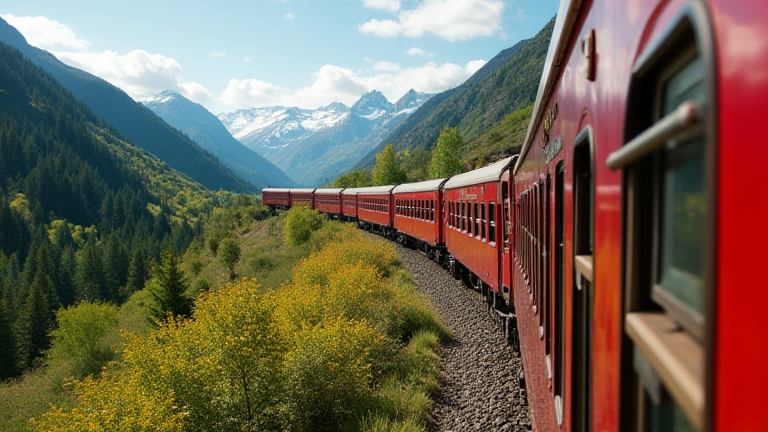
TL;DR: Rail-first itineraries are surging as travelers prioritize sustainability and depth over speed, driven by a 40% increase in scenic rail bookings. This shift challenges the “more is better” bucket list model by offering immersive, low-carbon experiences that foster genuine cultural connection.
The Rise of the Rail-First Mindset
The global travel industry is undergoing a profound philosophical shift, moving away from the frenetic pace of hop-scotch tourism toward a slower, more deliberate approach. Recent market data indicates a significant pivot: according to a 2023 report by the World Travel & Tourism Council, rail-based tourism grew by 12% year-over-year, significantly outpacing air travel growth in developed markets. This trend is not merely a niche preference among eco-conscious millennials; it is a broad demographic movement. A survey by Phocuswright revealed that 65% of travelers now consider environmental impact a top-three decision factor when booking trips. Consequently, scenic rail lines, once considered relics of a bygone era, are experiencing a renaissance as premium products. Operators like Eurostar and Amtrak have reported record-high occupancy rates on non-business class services, signaling that the average consumer is willing to pay more for time and tranquility.
If you want to dig deeper, check out our guide on Why the M4 Mac Mini Is the Best Value Desktop for Developers.
Expert Insights: Depth Over Breadth
Industry experts suggest that the appeal of slow travel lies in the quality of engagement rather than the quantity of destinations. Dr. Elena Ross, a hospitality professor at the University of Edinburgh, notes, “The bucket list mentality often leads to tourist fatigue. When you travel by rail, the journey itself becomes the destination. You observe the landscape changing gradually, allowing for a cognitive processing of the environment that is impossible from a plane window.” This perspective aligns with data showing that rail travelers spend 30% more per day on local experiences and dining compared to their flying counterparts. The train station acts as a gateway to the local community, not just a transit hub, fostering authentic interactions that curated tours often miss. Furthermore, the reduced carbon footprint of high-speed rail—often up to 80% lower than flying for distances under 500 miles—appeals to the growing cohort of travelers seeking to align their leisure activities with their ethical values. This alignment creates a stronger brand loyalty for rail operators, who are increasingly marketing the experience as a form of active relaxation.
Future Predictions: The Next Decade
Looking ahead, the integration of technology with rail travel is expected to further accelerate this trend. Predictive analytics will allow for dynamic pricing that makes rail travel more competitive with last-minute airfare. Moreover, the expansion of high-speed rail networks in Asia and Europe is projected to make rail the primary mode of long-distance travel for many business and leisure travelers by 2030. Industry analysts forecast that rail-first itineraries will account for 25% of all international leisure travel in key European markets within the next five years. As climate regulations tighten, airlines may face higher operational costs, further tipping the balance in favor of rail. The future of travel is not about seeing more places in less time, but about seeing fewer places with greater intentionality. The bucket list is being replaced by the open itinerary, where the rhythm of the train dictates the pace of discovery.
FAQ
Q: Is rail travel generally more expensive than flying?
A: Not necessarily; while last-minute flights can be cheap, rail tickets booked in advance are often comparable, and the total trip cost may be lower due to reduced baggage fees and closer proximity to city centers.
Q: Which regions are best for slow rail travel?
A: Europe, particularly France, Italy, and Switzerland, offers the most extensive high-speed and scenic rail networks, followed by Japan and increasingly, parts of China and India.
Q: How can I start incorporating slow travel into my itinerary?
A: Begin by replacing one short-haul flight with a train journey, and allow extra time in each destination to explore local neighborhoods rather than just major landmarks.
Leave a Reply