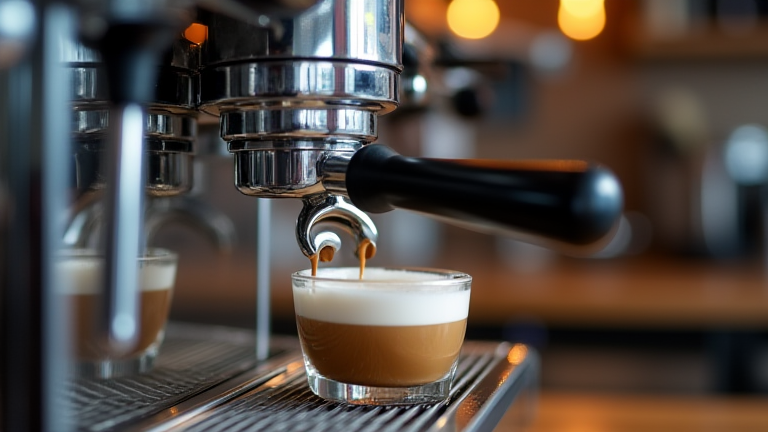
TL;DR: The surge in home espresso quality is driven by the convergence of advanced consumer electronics and a post-pandemic shift toward premium daily rituals. This trend has transformed a niche hobby into a mainstream market, fueled by accessible high-pressure technology and a culture of “third-place” experiences at home.
Market Analysis: The Rise of the Domestic Barista
The global home coffee equipment market has experienced unprecedented growth, with projections indicating a compound annual growth rate exceeding 5% through 2028. This expansion is not merely about selling more machines; it represents a fundamental shift in consumer behavior. The “Great Resignation” and the subsequent hybrid work models have decoupled coffee consumption from the office environment. Consumers are no longer satisfied with instant pods or basic drip coffee. They demand the ritual, the aroma, and the precision of café-quality espresso in their kitchens. Data from recent retail reports shows that sales of semi-automatic and fully automatic high-end espresso machines have outpaced traditional coffee makers by a significant margin, signaling a permanent upgrade in household appliance expectations.
Strategic Insights: Technology Meets Tradition
Success in this sector relies on bridging the gap between complex engineering and user-friendly design. The primary strategic insight is that modern consumers value consistency as much as flavor. Manufacturers are moving away from marketing raw pressure numbers (e.g., “15-bar”) and toward marketing outcome metrics such as temperature stability, flow rate control, and extraction uniformity. The “perfection” mentioned in the title is achieved through the integration of PID (Proportional-Integral-Derivative) controllers and high-quality boilers that maintain precise thermal stability. Furthermore, the strategy has shifted from hardware-only sales to ecosystem building. Brands are succeeding by offering app-based brewing profiles, subscription services for beans, and community-driven content that educates users on grind size and tamping techniques. This holistic approach increases customer lifetime value and reduces the barrier to entry for novice users.
Case Studies: Leading the Charge
Consider the rise of Breville/Sage, which successfully positioned its Barista Express as an entry-level luxury item. By bundling a high-quality burr grinder with the machine, they eliminated the most common point of failure for beginners: poor grinding. This strategic move reduced the learning curve and ensured better out-of-the-box results. Conversely, Nespresso’s success lies in convenience and sustainability. While purists may dismiss pod systems, Nespresso captured a massive market segment by offering a closed loop of quality assurance and easy recycling. Their strategy proves that for many, “perfection” means reliability and speed rather than manual control. Both examples illustrate that there is no single definition of success; rather, it is about identifying the specific pain point—whether it is complexity or consistency—and engineering a solution that addresses it directly.
FAQ
Q: Is investing in a high-end home espresso machine financially viable?
A: Yes, if you replace multiple daily café purchases, a mid-to-high-tier machine can pay for itself within two to three years, while also increasing property value through home office/kitchen upgrades.
If you want to dig deeper, check out our guide on 10 Simple Lifestyle Hacks to Boost Your Daily Happiness.
Q: What is the biggest technical barrier for new users?
A: The most significant barrier is not the machine itself, but the preparation of the coffee, specifically achieving the correct grind size and consistent tamping pressure, which requires practice and quality tools.
Q: How does sustainability impact consumer choice in this market?
A: Sustainability is a major driver, with consumers increasingly preferring machines that offer capsule recycling programs, energy-efficient heating elements, and durable build quality that reduces e-waste.
Leave a Reply