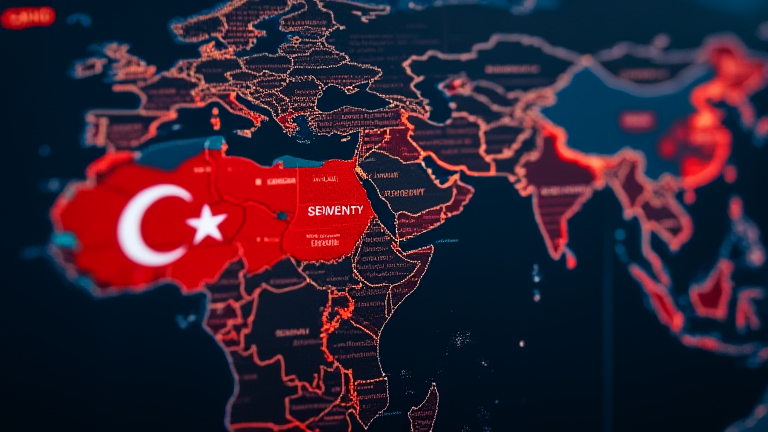
Turkey Blocks 12 Grok Posts Over National Security
TL;DR: Turkey has temporarily suspended access to twelve specific posts by the AI model Grok, citing violations of national security laws regarding state sovereignty and public order. This action signals a tightening regulatory stance on generative AI content that challenges state narratives or leaks sensitive geopolitical information.
The recent intervention by Turkish authorities marks a pivotal moment in the global discourse surrounding artificial intelligence governance. By blocking specific outputs from xAI’s Grok, Ankara is asserting that national security interests supersede the open-ended nature of generative AI. This move is not merely a technical takedown but a strategic signal to other nations and tech companies that AI models must adhere to local legal frameworks, particularly those concerning state integrity and public stability. The incident highlights the growing friction between the decentralized ethos of the tech industry and the centralized control mechanisms of nation-states.
If you want to dig deeper, check out our guide on Best Phone System for Home Care Agencies: Top Picks.
Market Analysis: The Compliance Premium
The immediate market reaction has been subtle but significant for tech firms operating in emerging markets. Investors are increasingly pricing in “regulatory risk” for AI companies with aggressive deployment strategies. Grok’s parent company, xAI, faces a dual challenge: maintaining the brand’s reputation for uncensored innovation while ensuring operational viability in key markets like Turkey. This creates a “compliance premium” where companies must invest heavily in localized content moderation filters. Market analysts suggest that this could lead to a bifurcation of AI models, with “global” versions remaining open and “local” versions heavily restricted. For competitors, this presents an opportunity to market their AI solutions as safer, more compliant alternatives for enterprise clients in high-risk jurisdictions, potentially shifting market share away from purely innovation-driven players.
Strategy Insights: Navigating the Gray Zone
From a strategic perspective, this incident underscores the necessity of a “sovereign AI” strategy. Companies can no longer rely on a one-size-fits-all global deployment model. Instead, they must adopt a modular approach to content filtering that can be dynamically adjusted based on geopolitical signals. Strategy consultants advise that tech firms should establish local legal counsel teams in markets with high censorship tendencies. Furthermore, transparency in how AI models are trained and moderated can serve as a diplomatic tool, allowing companies to engage in dialogue with regulators rather than facing abrupt bans. The key insight is that national security is not just a military concern but a digital one; AI that can generate disinformation or reveal state secrets is viewed as a direct threat to regime stability. Therefore, strategic alignment with local political priorities is becoming as important as technical superiority.
Case Studies: Lessons from the Past
Historical precedent suggests that such blocks are often precursors to broader regulatory frameworks. In 2018, Turkey blocked access to Twitter due to election-related content, which eventually led to stricter laws on digital platforms. Similarly, the Chinese government’s approach to AI involves mandatory labeling and strict content controls, which has forced global tech giants to build separate, compliant ecosystems for the Chinese market. These case studies illustrate that initial blocks are rarely isolated incidents. They are often the first step in a longer-term process of state integration into the digital infrastructure. Companies that ignored these early signals, such as certain social media platforms during the initial Twitter block, faced prolonged bans and significant revenue loss. Conversely, firms that proactively engaged with regulators and adjusted their content policies were able to maintain their market presence. The Grok incident serves as a modern echo of these past events, reminding stakeholders that digital sovereignty is a non-negotiable aspect of modern statecraft.
FAQ
Q: Did Turkey ban Grok entirely?
A: No, the block was targeted at twelve specific posts deemed to violate national security laws, not the entire platform or model.
Q: What specific laws were cited for the block?
A: Authorities cited laws related to state sovereignty, public order, and the prohibition of content that undermines national security interests.
Q: How should tech companies respond to similar blocks?
A: Companies should engage local legal experts, implement dynamic content filtering systems, and maintain open channels of communication
Leave a Reply