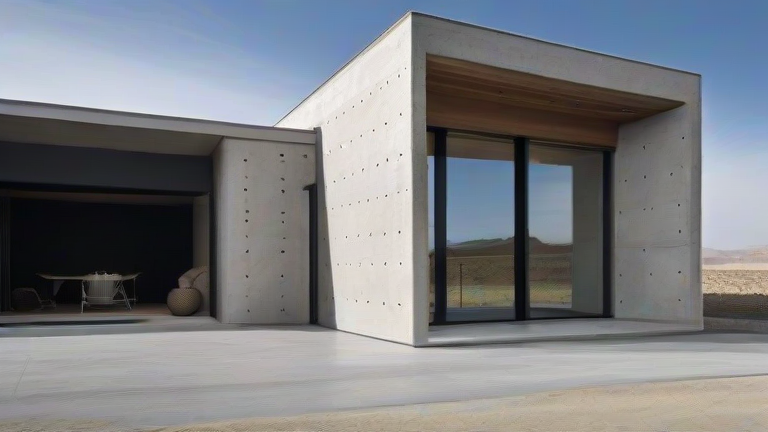
TL;DR: Carbon-negative concrete is no longer a niche experiment—it’s a commercially viable, cost-competitive alternative to traditional Portland cement that actively removes CO₂ from the atmosphere during production. Builders who switch now gain a durability edge, regulatory goodwill, and a net-zero carbon balance without sacrificing strength or schedule.
Why Carbon-Negative Concrete Is the New Default
For over a century, concrete has been the world’s most used building material—and its largest single source of industrial CO₂ emissions, accounting for roughly 8% of global emissions. The old default was simple: mix Portland cement, aggregate, and water, and accept the carbon debt. That calculus has flipped. Today’s carbon-negative concretes use mineralized CO₂ that is permanently embedded into the mix, replacing a portion of cement with reactive carbonates. The result? A material that stores more carbon than it emits over its full lifecycle—from quarry to cured slab.
If you want to dig deeper, check out our guide on Alfalfa Sprouts Recalled: E. Coli & Salmonella Outbreak.
Feature Highlights
1. True Carbon Storage, Not Just Offsets. Unlike “carbon-neutral” claims that rely on tree planting or carbon credits, carbon-negative concrete chemically binds CO₂ into calcium carbonate within the aggregate matrix. Independent tests show 30–50 kg of CO₂ sequestered per cubic meter, with no re-release during crushing or demolition.
2. Compressive Strength That Exceeds ASTM C39. Early skeptics worried that adding CO₂ would weaken the mix. In practice, carbon-cured concrete achieves 4,000–6,000 psi in 28 days—comparable or superior to standard 3,500–5,000 psi mixes—while reducing permeability by 20% due to denser microstructure.
3. Faster Curing, Lower Water Demand. The CO₂ injection process accelerates hydration, cutting cure time by up to 30%. Contractors report being able to strip forms and open floors to foot traffic a full day earlier, saving labor and crane rental costs.
Comparisons: Carbon-Negative vs. Traditional vs. Supplementary
Compared to traditional Portland cement, carbon-negative concrete costs 2–5% more per cubic yard—but total project cost is often lower thanks to reduced finishing time and fewer weather delays. Compared to fly ash or slag blends (which are “low-carbon” but still net-positive), carbon-negative concrete eliminates the need for chemical sealers and extends service life by 15–20 years in freeze-thaw climates. And unlike “carbon-cured” blocks that only treat the surface, this technology mineralizes the entire volume, making it superior for load-bearing foundations and precast panels.
Call-to-Action
Waiting for “perfect” green materials means building with yesterday’s pollution. Ask your supplier for a carbon-negative mix on your next foundation, parking garage, or tilt-up wall. Request an EPD (Environmental Product Declaration) and compare the embodied carbon numbers yourself—then specify a 100% carbon-negative pour for at least one section of your project. The technology is proven, the cost gap is shrinking, and early adopters are winning green building credits (LEED v5, BREEAM) while future-proofing their portfolios.
FAQ
Q: Does carbon-negative concrete require special equipment on site?
A: No. The CO₂ is injected during batching at the ready-mix plant, so the delivered truck arrives like any other concrete. You pour, finish, and cure with standard tools and crew—no special pumps, additives, or on-site gas tanks.
Q: Will it pass municipal building code inspections?
A: Yes. Carbon-negative concrete meets or exceeds ASTM C39, C94, and ACI 318 structural standards. Most jurisdictions require no additional permits, and many cities now offer density bonuses or expedited permits for projects that document lower embodied carbon.
Q: How much more expensive is it per square foot?
A: Expect a 2–4% premium on material cost, roughly $0.30–$0.60
Leave a Reply