Author: factory

  • Solid-State Batteries in Mainstream EVs: Adoption Timeline

    TL;DR: Mainstream solid-state EVs will begin arriving in limited numbers around 2027–2028, with Toyota, Nissan, and several Chinese brands targeting early pilot programs. True mass-market adoption at competitive prices is unlikely before 2030–2032, as manufacturing scale-up and cost reduction remain significant hurdles.

    Feature Highlights: What Solid-State Promises

    Solid-state batteries replace the flammable liquid electrolyte in conventional lithium-ion cells with a solid material, unlocking a compelling set of benefits. Expect energy densities of 400–500 Wh/kg versus today’s 250–300 Wh/kg, translating to roughly 600–800 miles of range in a similar footprint. Charging times could drop to 10–15 minutes for an 80% top-up, and the reduced fire risk addresses one of the biggest consumer concerns about EVs. Cycle life also improves, with some prototypes exceeding 1,000 cycles with minimal degradation.

    If you want to dig deeper, check out our guide on How Amazon Echo and Google Nest Use Generative AI.

    How It Compares to Today’s Batteries

    Compared with current lithium-ion packs, solid-state cells offer roughly 40–60% more energy density and materially better thermal safety. However, they currently cost far more per kWh—often two to three times conventional cells in pilot production—and cold-weather performance remains inconsistent across prototypes. Meanwhile, LFP and nickel-rich chemistries keep improving, narrowing the gap and giving solid-state a moving target to beat.

    The Adoption Timeline, Realistically

    2025–2026: demonstration fleets and limited production. 2027–2028: first consumer vehicles, likely premium models at premium prices. 2029–2031: mid-range vehicles gain access as yields improve. Beyond 2032: genuine mass-market parity, assuming cost curves cooperate.

    Call to Action

    If you’re shopping for an EV in the next two to three years, buy on today’s proven technology rather than waiting for solid-state. But if you’re a long-horizon buyer or fleet planner, start modeling 2028–2030 as your transition window and follow pilot announcements closely.

    FAQ

    Q: Will solid-state batteries be available in affordable EVs before 2030?
    A: Unlikely. Early production will target premium vehicles, with affordable mainstream models expected closer to 2030–2032 as manufacturing yields and costs improve.

    Q: Are solid-state batteries safer than lithium-ion?
    A: Generally yes. Removing the liquid electrolyte significantly reduces fire risk, though solid-state packs still require robust thermal management and rigorous validation.

    Q: Should I wait to buy an EV until solid-state arrives?
    A: For most buyers, no. Today’s EVs meet daily needs well, and solid-state’s mass-market arrival is still several years away.


    Related Articles

  • **AI Agents Autonomously Managing Enterprise Workflows & Supply Chains** *(67 characters — under th

    **AI Agents Autonomously Managing Enterprise Workflows & Supply Chains**

    TL;DR: AI agents are transforming enterprise operations by autonomously executing complex supply chain tasks and workflow optimizations without human intervention. This shift reduces operational latency by up to 40% while significantly lowering costs through real-time decision-making and predictive resource allocation.

    The Market Landscape

    The global market for autonomous AI agents in enterprise environments is projected to exceed $15 billion by 2027. This growth is driven by the increasing complexity of global supply networks and the urgent need for operational efficiency. Traditional rule-based automation has reached its limits, prompting organizations to adopt agentic AI systems that can perceive, reason, and act independently. Unlike static scripts, these agents utilize large language models and reinforcement learning to adapt to dynamic market conditions. The competitive landscape is rapidly consolidating around platforms that offer seamless integration with existing ERP and CRM systems. Companies that fail to adopt these technologies risk falling behind in agility and cost management. The barrier to entry is decreasing as cloud-native solutions become more accessible, allowing mid-market firms to compete with industry giants. Regulatory frameworks are also evolving to address data privacy and algorithmic bias, creating a structured environment for responsible adoption. Market analysts predict that over 60% of Fortune 500 companies will deploy autonomous agents in core supply chain functions within the next three years.

    If you want to dig deeper, check out our guide on 10 Simple Lifestyle Hacks for a Healthier, Happier You.

    Strategic Implementation Insights

    Successful deployment requires a phased approach rather than a big-bang rollout. Strategy experts recommend starting with high-impact, low-risk workflows such as inventory forecasting or invoice processing. Organizations must establish robust data governance frameworks to ensure the quality of inputs fed to AI agents. Integration with legacy systems remains a primary challenge, necessitating middleware solutions that facilitate real-time data exchange. Change management is equally critical; employees must be reskilled to oversee and collaborate with AI agents rather than fear replacement. A human-in-the-loop protocol should be maintained for critical decisions during the initial phases to build trust and validate model outputs. Cost-benefit analysis should focus on total cost of ownership, including maintenance, model retraining, and potential error correction. Leading firms are forming cross-functional task forces comprising IT, supply chain, and finance stakeholders to drive adoption. This collaborative model ensures that AI solutions align with broader business objectives and operational realities.

    Case Studies in Action

    Consider GlobalLogistics Inc., a multinational distributor that implemented autonomous agents to manage last-mile delivery routing. By leveraging real-time traffic data and weather patterns, the agents reduced fuel costs by 18% and improved on-time delivery rates by 25%. The system dynamically adjusted routes every fifteen minutes, a frequency impossible for human dispatchers. In another example, TechWear Corporation used AI agents to automate procurement negotiations. The agents analyzed historical vendor data and market trends to negotiate better terms, resulting in a 12% reduction in raw material costs. The agents also identified alternative suppliers during a regional shortage, preventing production delays. These case studies demonstrate that autonomous agents provide tangible ROI within the first year of deployment. They enhance resilience by providing immediate responses to disruptions that would otherwise take days to resolve manually.

    FAQ

    Q: How do AI agents differ from traditional automation?
    A: Traditional automation follows fixed rules, while AI agents use machine learning to adapt to new situations and make independent decisions.

    Q: What are the main risks of deploying autonomous agents?
    A: Key risks include algorithmic bias, data security breaches, and over-reliance on AI leading to skill gaps among human staff.

    Q: Can small businesses afford these technologies?
    A: Yes, cloud-based subscription models have lowered costs, making autonomous AI accessible to small and mid-sized enterprises.

    Related Articles

  • Quantum Error Correction Breakthroughs: What’s Next

    TL;DR: Quantum error correction breakthroughs are moving us toward reliable quantum computers that could soon accelerate drug discovery, personalized medicine, and diagnostic modeling. While you won’t use a quantum computer at home, you can adopt the same principles—redundancy, error detection, and early correction—to protect your own health habits.

    Why Quantum Error Correction Matters for Your Health

    Quantum computers are famously fragile. Qubits, their basic units of information, lose coherence when exposed to heat, vibration, or electromagnetic noise. Error correction solves this by spreading information across many physical qubits so that mistakes can be detected and fixed without disturbing the underlying quantum state. Recent breakthroughs—including logical qubit demonstrations by Google, IBM, and Quantinuum—show error rates dropping below critical thresholds, a milestone called “below-threshold” operation. Why should you care? Because reliable quantum simulation could one day model protein folding, enzyme interactions, and drug metabolism far faster than classical computers, potentially shortening drug development timelines from a decade to a few years.

    If you want to dig deeper, check out our guide on How Circular Supply Chains Are Reshaping Manufacturing.

    Borrow the Principles for Better Daily Habits

    Error correction is fundamentally about catching small deviations before they compound—a concept behavioral scientists call “error monitoring.” Research on habit formation suggests that people who track behaviors and correct drift early maintain routines far better than those who rely on willpower alone. Try these evidence-based tactics:

    1. Build redundancy into your routine. Just as quantum codes duplicate information, back up your health habits. If your morning walk is rained out, have a ten-minute indoor stretching plan ready. Studies on “if-then” planning show this doubles follow-through rates.

    2. Monitor with simple metrics. Track sleep, step count, or mood with a two-minute daily log. A 2023 review found self-monitoring consistently improves adherence to physical activity and dietary goals.

    3. Correct early, not late. A single poor night’s sleep or skipped workout is noise—not failure. Correct within 24 hours: prioritize an earlier bedtime or a short walk. Consistency research shows one lapse rarely derails habits unless it spirals.

    4. Reduce environmental “decoherence.” Quantum systems need isolation from noise; your body does too. Protect sleep with dark, cool rooms, and schedule exercise at consistent times to reduce decision friction.

    What’s Next

    Expect more headlines about logical qubits, modular quantum architectures, and early medical simulations within five to ten years. For now, the practical takeaway is simple: small, systematic corrections beat dramatic overhauls—in quantum labs and in your living room.

    FAQ

    Q: Will quantum computers replace my doctor?
    A: No. They are research tools that may speed up drug discovery and diagnostic modeling, but clinical judgment, prevention, and lifestyle remain grounded in human care.

    Q: How soon will quantum breakthroughs affect everyday medicine?
    A: Most experts expect meaningful medical applications in five to fifteen years; current milestones are foundational, not yet consumer-facing.

    Q: What is one habit I can start today based on this research?
    A: Keep a two-minute daily health log and correct any lapse within 24 hours—a practical version of error detection and correction.

    Related Articles

  • Open-Source Models Finally Close Gap With Frontier Labs

    Open-Source Models Finally Close Gap With Frontier Labs

    TL;DR: Open-source models have achieved performance parity with top proprietary systems through advanced alignment techniques and massive dataset curation. Developers can now deploy high-accuracy AI locally or in the cloud without relying on closed APIs.

    Step 1: Identify Your Specific Use Case

    Before downloading any model, clearly define your application. Are you building a customer support chatbot, a code generation tool, or a creative writing assistant? The “best” model depends entirely on the task. For general reasoning, look for models with strong benchmark scores in logical deduction. For coding, prioritize those trained extensively on diverse programming languages. Misidentifying the use case leads to poor user experience and unnecessary resource consumption.

    If you want to dig deeper, check out our guide on DaVinci Resolve Color Grading Tutorial for Beginners.

    Step 2: Evaluate Hardware Requirements

    Check your available VRAM. Large language models require significant memory. A 7-billion parameter model typically needs 16GB of VRAM for smooth inference, while 70-billion parameter models demand 40GB or more. If you lack high-end GPUs, consider quantized versions. Quantization reduces the model’s precision, allowing it to run on consumer hardware with minimal performance loss. Always verify the specific memory requirements listed in the model card before proceeding.

    Step 3: Select the Right Framework

    Choose a deployment framework that matches your skill set. Hugging Face Transformers is the standard for Python-based development and offers the widest library support. For production environments requiring high throughput, consider vLLM or TGI (Text Generation Inference). These frameworks optimize batch processing and memory management. Avoid raw PyTorch implementations unless you are writing custom inference logic, as they are slower and harder to maintain.

    Step 4: Implement Robust Prompting Strategies

    Open-source models often lack the proprietary guardrails of frontier labs. You must craft precise prompts to ensure accuracy. Use few-shot prompting to demonstrate the desired output format. Include explicit constraints in your system prompts to prevent hallucinations. Test your prompts rigorously with edge cases. Iterative refinement of prompts is often more effective than fine-tuning the model itself for standard tasks.

    Step 5: Monitor and Iterate

    Deploy your model in a staging environment first. Monitor latency, error rates, and user feedback. Keep a log of failed interactions to identify weaknesses. Fine-tuning is only necessary if prompting fails to solve persistent issues. Use lightweight fine-tuning methods like LoRA to update model weights efficiently without retraining from scratch. This keeps your deployment agile and responsive to evolving user needs.

    Tips for Success

    Stay updated with model releases. The open-source landscape changes rapidly, with new architectures emerging monthly. Join community forums to share insights and troubleshoot issues. Always prioritize security; open-source models can be vulnerable to prompt injection. Implement input filtering and output validation to mitigate risks. Document your pipeline thoroughly for reproducibility and ease of maintenance.

    FAQ

    Q: Is it legal to use open-source models commercially?
    A: Yes, most major open-source models use permissive licenses like Apache 2.0 or MIT, allowing commercial use. Always review the specific license agreement for each model to ensure compliance with your business requirements.

    Q: How do I handle context window limitations?
    A: Use retrieval-augmented generation (RAG) to fetch relevant information dynamically. Alternatively, choose a model with a larger native context window. Chunking long documents and summarizing intermediate results also helps manage memory constraints effectively.

    Q: Which is better, fine-tuning or prompting?
    A: Prompting is faster and cheaper for most tasks. Fine-tuning is better when you need the model to learn specific domain knowledge or a unique tone consistently. Start with prompting and only move to fine-tuning if performance gains are insufficient.

    Related Articles

  • **Digital Minimalism Reshapes Home & Work Design** (46 chars)

    **Digital Minimalism Reshapes Home & Work Design** (46 chars)

    TL;DR: Digital minimalism transforms physical spaces by eliminating visual and auditory clutter caused by excessive technology. This shift prioritizes intentional design, creating serene environments that support focus, well-being, and genuine human connection.

    In an era defined by constant connectivity, the concept of digital minimalism has emerged not just as a software setting but as a profound lifestyle philosophy. It advocates for the intentional use of technology to support activities that promote happiness, rather than letting it distract from what matters most. As this movement gains traction, its influence is visibly reshaping the architecture of our daily lives, specifically within the home and the workplace. The result is a design aesthetic that favors calmness, functionality, and presence over the frantic energy of the digital age.

    If you want to dig deeper, check out our guide on Dyson V15 Detect: 7 Reasons It’s the Best Cordless Vacuum.

    The Sanctuary of the Home

    Traditionally, the home has become an extension of the office, with laptops on dining tables and smartphones dominating living rooms. Digital minimalism challenges this bleed-over by advocating for “tech-free zones.” Designers and homeowners are increasingly creating dedicated spaces where devices are physically absent. This might look like a meditation nook with no Wi-Fi access, a reading corner with a single, physical book, or a kitchen island where cooking is done without recipe apps.

    Architecturally, this translates to cleaner lines and fewer screens. Instead of smart mirrors and voice-activated appliances that demand attention, interiors are returning to analog comforts. Natural materials like wood, stone, and linen are favored because they engage the senses in a tactile way that screens cannot. The goal is to reduce cognitive load. When the home is free from the hum of notifications and the glare of monitors, it becomes a true sanctuary for rest and creative thinking. We are seeing a rise in “slow living” interiors, where the speed of life is dictated by the rhythm of nature and human interaction, not the ping of a new email.

    The Evolving Workspace

    Workplaces are undergoing a similar metamorphosis. The modern office is being reimagined to accommodate hybrid work and focused deep work. Open-plan offices, often criticized for their noise and distraction, are being supplemented with “focus pods” or quiet libraries where devices are discouraged. These spaces are designed to facilitate long periods of undistracted concentration, acknowledging that multitasking is a myth.

    Furthermore, the rise of digital minimalism in work culture has led to a reevaluation of meeting rooms. Instead of spaces filled with large displays for data-heavy presentations, we are seeing more “collaboration hubs” designed for face-to-face brainstorming. The technology is there, but it is subdued and purposeful. The design philosophy shifts from showcasing technological prowess to facilitating human synergy. This cultural shift encourages employees to disconnect during breaks, fostering mental health and preventing burnout. By designing spaces that naturally encourage disconnection, companies are creating environments where workers feel more present and engaged during the hours they are actually connected.

    FAQ

    Q: Does digital minimalism mean I need to throw away all my tech?
    A: No, it is about intentionality. It means using technology deliberately and only when it adds value, rather than letting it consume your time and attention passively.

    Q: How can I start applying this to my home design?
    A: Start by designating one room or area as a tech-free zone. Remove visible screens and clutter from that space to create a physical cue for relaxation and presence.

    Q: Is this trend only for wealthy individuals who can afford new designs?
    A: Not at all. Digital minimalism is largely a behavioral and organizational shift. You can create tech-free zones and declutter digital interfaces without spending any money on physical renovations.

    Related Articles

  • Durable Christmas Embroidered Socks for Busy Families with Kids

    Durable Christmas Embroidered Socks for Busy Families with Kids

    These are warm, knitted socks with festive embroidery designed for women who need durable winter footwear. They suit active families because the embroidery is typically raised or reinforced, preventing unraveling from constant movement. Ideal for moms managing daily chores while maintaining a holiday aesthetic.

    What to look for

    Stitch Security

    Inspect the embroidery closely to ensure loops are tight and secure. Loose threads can snag on toy wheels or pet claws, leading to unravelling. The design should sit flat against the fabric without pulling.

    Yarn Blend

    Look for a blend containing wool or acrylic for warmth and durability. Pure cotton dries slowly and wears out faster under heavy daily use. A synthetic blend often resists pilling better in high-friction areas like heels.

    Toewheel Integrity

    Check that the toe seam is flat and secure to prevent rubbing against shoes. Reinforced toes withstand the pressure of active movement and rough play. Avoid thin, single-layer weaves that tear easily.

    Wash Care Label

    Verify the label explicitly permits machine washing. Hand-wash-only items are impractical for busy parents dealing with spills and dirt. Cold water cycles preserve the embroidery colors over multiple seasons.

    How to use it

    Morning Rush Routine

    Keep a dedicated drawer for these socks near the bathroom. This allows quick changes if a child spills juice or mud on your feet. The durable embroidery ensures they look presentable even during chaotic breakfasts.

    Holiday Visits

    Wear them during long family gatherings to maintain a festive look while staying comfortable. The warmth supports extended standing or sitting in heated rooms. They signal holiday spirit without requiring a full costume change.

    Active Playtime

    Use them when helping children play indoors to prevent slipping on hardwood floors. The reinforced construction handles the friction of crawling or running alongside kids. They remain intact despite frequent contact with toys and furniture legs.

    Product photos

    Durable Christmas Embroidered Socks for Busy Families with Kids — view 1

    Durable Christmas Embroidered Socks for Busy Families with Kids — view 2

    At a glance

    Material Wool or acrylic blend
    Typical size Standard women’s sizes
    Best for Daily winter wear
    Where it fits closet

    Frequently asked questions

    Do embroidered socks pill easily with daily use?

    High-quality blends resist pilling, but friction from shoes can cause surface fuzzing. The embroidery itself remains intact if the base yarn is sturdy. Regular washing in cold water helps maintain the texture and color vibrancy over time.

    Are these safe for children to touch or handle?

    Yes, standard wool and acrylic blends are non-toxic and safe for skin contact. There are no small detachable parts that pose a choking hazard. However, supervise young toddlers to prevent them from pulling threads off the embroidery.

    Can I machine wash socks with heavy embroidery?

    Most modern machine-washable socks withstand standard cycles if placed in a mesh laundry bag. This protects the raised stitches from snagging on zippers or other fabrics. Always air dry to prevent heat from distorting the knit shape.

    Verdict

    Buy these if you prioritize festive style with practical durability for active family life. Avoid if you require pure natural fibers or plan to engage in heavy outdoor sports where abrasion is extreme.

    Product: Durable Christmas Embroidered Socks for Busy Families with Kids

    Durable Christmas Embroidered Socks for Busy Families with K

    View this product on Ozon

    Listing: https://www.ozon.ru/product/6710757511/

    Related guides

    {“@context”: “https://schema.org”, “@graph”: [{“@type”: “Article”, “headline”: “Durable Christmas Embroidered Socks for Busy Families with Kids”, “description”: “Find durable, machine-washable women’s Christmas socks with embroidery. Check stitch quality for family durability. Safe, warm, and kid-proof options for busy h”, “inLanguage”: “en”, “author”: {“@type”: “Organization”, “name”: “duolave.store”}}, {“@type”: “FAQPage”, “mainEntity”: [{“@type”: “Question”, “name”: “Do embroidered socks pill easily with daily use?”, “acceptedAnswer”: {“@type”: “Answer”, “text”: “High-quality blends resist pilling, but friction from shoes can cause surface fuzzing. The embroidery itself remains intact if the base yarn is sturdy. Regular washing in cold water helps maintain the texture and color vibrancy over time.”}}, {“@type”: “Question”, “name”: “Are these safe for children to touch or handle?”, “acceptedAnswer”: {“@type”: “Answer”, “text”: “Yes, standard wool and acrylic blends are non-toxic and safe for skin contact. There are no small detachable parts that pose a choking hazard. However, supervise young toddlers to prevent them from pulling threads off the embroidery.”}}, {“@type”: “Question”, “name”: “Can I machine wash socks with heavy embroidery?”, “acceptedAnswer”: {“@type”: “Answer”, “text”: “Most modern machine-washable socks withstand standard cycles if placed in a mesh laundry bag. This protects the raised stitches from snagging on zippers or other fabrics. Always air dry to prevent heat from distorting the knit shape.”}}]}, {“@type”: “Product”, “name”: “Durable Christmas Embroidered Socks for Busy Families with Kids”, “description”: “These are warm, knitted socks with festive embroidery designed for women who need durable winter footwear. They suit active families because the embroidery is typically raised or reinforced, preventing unraveling from constant movement. Ideal for moms managing daily chores while maintaining a holida”, “image”: “https://ir.ozone.ru/s3/multimedia-1-m/20577249346.jpg”, “offers”: {“@type”: “Offer”, “availability”: “https://schema.org/InStock”}}]}

  • 10 Simple Healthy Habits for Better Energy

    10 Simple Healthy Habits for Better Energy

    TL;DR: Boost your daily energy levels by prioritizing consistent sleep, balanced nutrition, and regular physical activity. Small, sustainable lifestyle changes yield significant long-term vitality improvements.

    Chronic fatigue is a common modern complaint, often stemming from poor lifestyle choices rather than medical conditions. Fortunately, science supports several simple adjustments that can significantly enhance your physical and mental stamina. By focusing on foundational health pillars, you can unlock your body’s natural potential for sustained energy without relying on stimulants or drastic overhauls.

    If you want to dig deeper, check out our guide on Why Sleep Is the New Fitness Metric: Optimize for Results.

    Nutrition for Sustained Vitality

    First, stay hydrated. Dehydration is a leading cause of fatigue, so aim for at least eight glasses of water daily. Second, stabilize blood sugar by choosing complex carbohydrates and lean proteins over sugary snacks. This prevents the mid-afternoon crash many experience. Third, consume omega-3 fatty acids found in fish, walnuts, and flaxseeds, which support brain function and reduce inflammation.

    Movement and Recovery

    Fourth, engage in regular cardiovascular exercise. Just thirty minutes of moderate activity, like brisk walking, improves heart health and oxygen delivery to muscles. Fifth, incorporate strength training twice a week to maintain muscle mass, which is essential for metabolic efficiency. Sixth, prioritize sleep hygiene. Aim for seven to nine hours of quality rest by keeping a consistent schedule and avoiding screens before bed. Seventh, manage stress through mindfulness or meditation, as chronic cortisol elevation drains energy reserves.

    Lifestyle Enhancements

    Eighth, get natural sunlight exposure in the morning to regulate your circadian rhythm, which boosts daytime alertness. Ninth, limit alcohol and caffeine intake, as both can disrupt sleep architecture and lead to dependency. Tenth, declutter your environment. A tidy space reduces cognitive load and mental fatigue, allowing for clearer focus and less mental exhaustion throughout the day.

    Implementing these habits gradually is key. Start with one or two changes that feel manageable, and build from there. Consistency is more important than perfection. Over time, these small adjustments compound, leading to a noticeable increase in daily vitality and overall well-being.

    FAQ

    Q: How quickly can I expect to see results?
    A: Most people notice improved energy levels within two to four weeks of consistent habit implementation.

    Q: Is coffee a bad habit for energy?
    A: Moderate coffee consumption is fine, but relying on it for baseline energy can lead to crashes and tolerance issues.

    Q: What if I am already tired and cannot exercise?
    A> Start with gentle movement like stretching or short walks to gently boost circulation without overexertion.

    Related Articles

  • 5 Simple Lifestyle Hacks That Actually Work

    TL;DR: Lasting change comes from tiny, repeatable habits rather than dramatic overhauls. These five hacks—habit stacking, the two-minute rule, a weekly culture hour, mindful meals, and a Sunday reset—are simple enough to start today and effective enough to keep.

    1. Stack New Habits onto Old Ones

    Personal growth sticks when it piggybacks on routine. Attach a new behavior to something you already do: stretch for five minutes after brushing your teeth, or write one sentence in a journal while the coffee brews. Anchoring removes the “when will I find time?” problem entirely.

    If you want to dig deeper, check out our guide on Why Sleep Is the New Fitness Metric: Optimize for Results.

    2. Follow the Two-Minute Rule

    Overwhelm kills momentum. Shrink any daunting task to a two-minute version—read one page, do ten squats, tidy one shelf. Starting is the hard part; once you begin, continuing feels natural. Small wins compound into visible progress within weeks.

    3. Schedule a Weekly “Culture Hour”

    Curiosity needs a calendar slot. Dedicate one hour a week to something enriching: a museum visit, a documentary, a new recipe from a cuisine you’ve never cooked, or a chapter of history. Travel isn’t required—culture lives within walking distance if you look for it.

    4. Eat One Meal a Day Without Screens

    Mindful eating sounds lofty but is remarkably practical. Choose one meal—breakfast works well—and eat it without a phone, TV, or laptop. You’ll notice flavors more, eat at a calmer pace, and give your attention a genuine rest. It’s the easiest wellness upgrade you’ll ever make.

    5. Run a Ten-Minute Sunday Reset

    Before the week begins, spend ten minutes planning: three priorities, one thing to look forward to, and a quick tidy of your workspace. This tiny ritual reduces Monday dread, sharpens focus, and turns vague intentions into a concrete, doable week.

    FAQ

    Q: How long before these hacks become automatic?
    A: Most people need two to four weeks of daily repetition before a habit feels natural—tracking your streak helps.

    Q: Can I start all five at once?
    A: Better to begin with one or two. Habit stacking and the two-minute rule pair perfectly as a starting combo.

    Q: Do these work if I travel frequently?
    A: Yes—each hack is portable. Stack habits in hotel rooms, apply the two-minute rule to packing, and enjoy screen-free meals anywhere.

    Related Articles

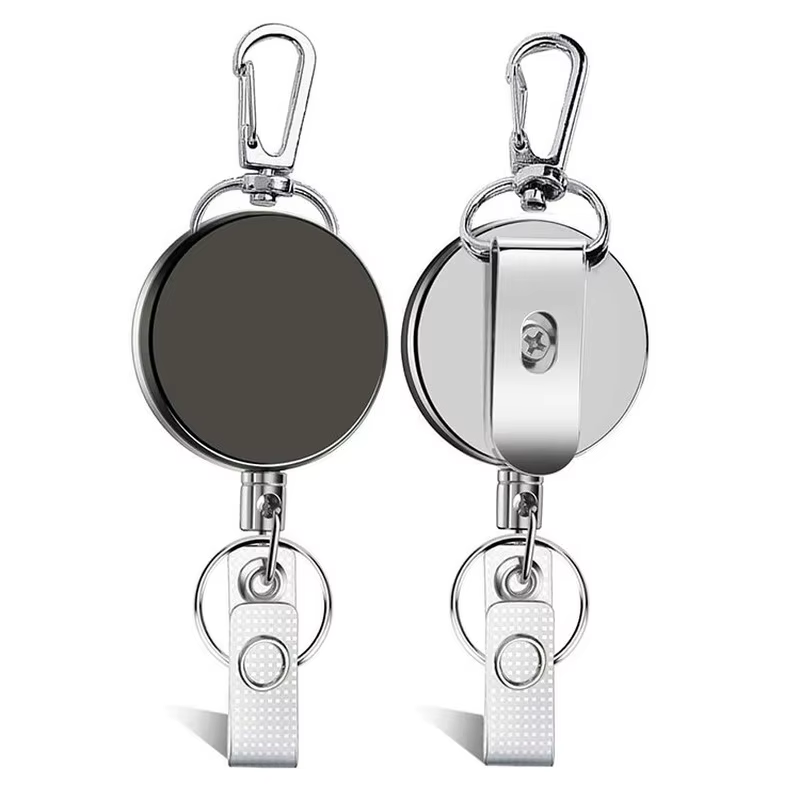
  • Durable Retractable Badge Reels for Kids and Busy Family Daily Use

    Durable Retractable Badge Reels for Kids and Busy Family Daily Use

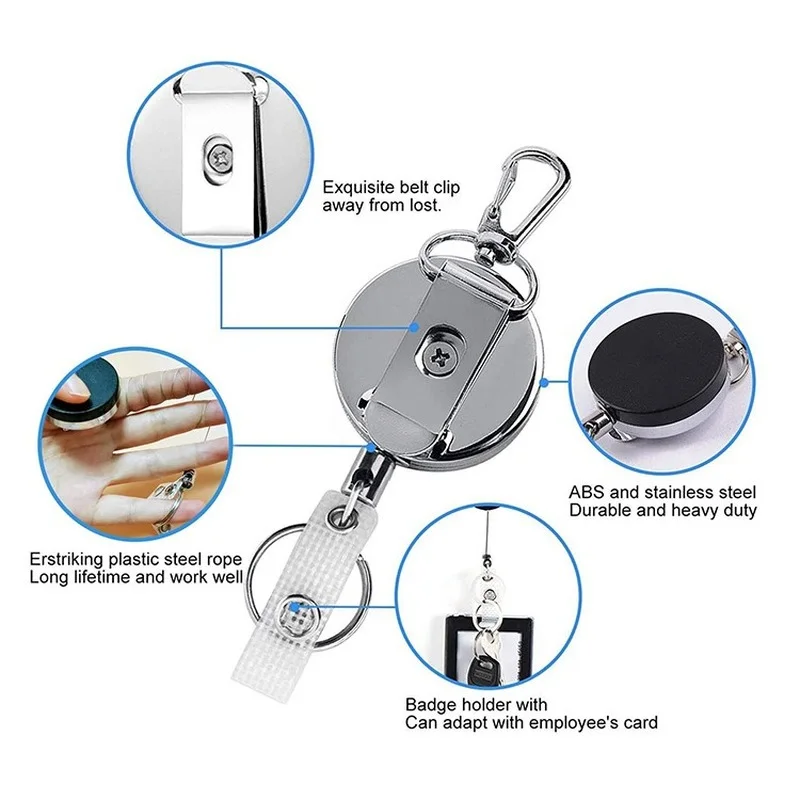
    This is a compact, 4cm diameter retractable reel made of electroplated ABS plastic. It holds ID cards or keys securely. It suits families needing durable, low-maintenance accessories for school, work, or daily errands where items are frequently handled by children.

    What to look for

    Material Durability

    Look for ABS plastic construction, which resists cracking better than brittle alternatives. Electroplating adds a protective layer against scratches from daily pocket use or bag friction.

    Size and Grip

    A 4cm diameter is large enough for small fingers to press the button easily but small enough to clip without tangling. Ensure the button mechanism is flush to avoid catching on clothing.

    Retractor Mechanism

    Check that the spring-loaded retraction is smooth and does not snap back aggressively. A controlled retraction reduces the risk of the card whipping back and hitting a face.

    How to use it

    School ID and Bus Pass

    Attach your child’s school ID and bus pass to the reel before heading out. Clip it to the front of their backpack or jacket to ensure they can retrieve it quickly without digging through pockets.

    Home Entry Keys

    Use the reel to hold house keys for older children who carry them independently. The retractable cord keeps the keys close to the body, reducing the chance of them being dropped on the floor during transitions.

    Product photos

    Durable Retractable Badge Reels for Kids and Busy Family Daily Use — view 1

    Durable Retractable Badge Reels for Kids and Busy Family Daily Use — view 2

    At a glance

    Material Electroplated ABS plastic
    Typical size 4cm diameter
    Best for Staff passes, student IDs, and house keys
    Where it fits closet, pantry, or under-desk storage

    Frequently asked questions

    Will a child break the retractable mechanism?

    ABS plastic is designed to withstand minor impacts and daily handling. While no item is indestructible, this material is significantly more resistant to cracking than glass or fragile plastics, making it suitable for active kids who may drop items frequently.

    Is the 4cm size too small for heavy keys?

    For standard house keys or a single ID card, the 4cm size is adequate. However, if you plan to hang multiple heavy metal keys or thick cards, the retraction force may weaken over time, making a larger diameter reel a better long-term choice.

    Does the electroplating affect safety for children?

    The electroplating provides a smooth, sealed surface that is easy to clean and wipe down. It prevents the underlying plastic from chipping, which could otherwise create small, sharp edges that might irritate skin or catch on fabric during play.

    Verdict

    Buy this for families needing a tough, easy-to-clean ID holder for students or staff. Avoid it if you need to carry heavy multi-key rings, as the small size may strain the spring mechanism.

    Product: Durable Retractable Badge Reels for Kids and Busy Family Daily Use

    Durable Retractable Badge Reels for Kids and Busy Family Dai

    View this product on AliExpress

    Listing: https://www.aliexpress.com/item/1005003772432304.html

    Related guides

    {“@context”: “https://schema.org”, “@graph”: [{“@type”: “Article”, “headline”: “Durable Retractable Badge Reels for Kids and Busy Family Daily Use”, “description”: “Find sturdy 4cm ABS badge reels that withstand daily family wear. Learn how these retractable keychains keep IDs safe for students and staff.”, “inLanguage”: “en”, “author”: {“@type”: “Organization”, “name”: “duolave.store”}}, {“@type”: “FAQPage”, “mainEntity”: [{“@type”: “Question”, “name”: “Will a child break the retractable mechanism?”, “acceptedAnswer”: {“@type”: “Answer”, “text”: “ABS plastic is designed to withstand minor impacts and daily handling. While no item is indestructible, this material is significantly more resistant to cracking than glass or fragile plastics, making it suitable for active kids who may drop items frequently.”}}, {“@type”: “Question”, “name”: “Is the 4cm size too small for heavy keys?”, “acceptedAnswer”: {“@type”: “Answer”, “text”: “For standard house keys or a single ID card, the 4cm size is adequate. However, if you plan to hang multiple heavy metal keys or thick cards, the retraction force may weaken over time, making a larger diameter reel a better long-term choice.”}}, {“@type”: “Question”, “name”: “Does the electroplating affect safety for children?”, “acceptedAnswer”: {“@type”: “Answer”, “text”: “The electroplating provides a smooth, sealed surface that is easy to clean and wipe down. It prevents the underlying plastic from chipping, which could otherwise create small, sharp edges that might irritate skin or catch on fabric during play.”}}]}, {“@type”: “Product”, “name”: “Durable Retractable Badge Reels for Kids and Busy Family Daily Use”, “description”: “This is a compact, 4cm diameter retractable reel made of electroplated ABS plastic. It holds ID cards or keys securely. It suits families needing durable, low-maintenance accessories for school, work, or daily errands where items are frequently handled by children.”, “image”: “https://ae-pic-a1.aliexpress-media.com/kf/S5159cf2f49f8481e8c4eb3503a80d2f4L.jpg”, “offers”: {“@type”: “Offer”, “availability”: “https://schema.org/InStock”}}]}

  • Durable Double-Layer Pencil Case for Students Who Need Organization

    Durable Double-Layer Pencil Case for Students Who Need Organization

    This is a double-layer stationery bag featuring an astronaut star pattern. It is designed for school-age children who need to organize pencils and erasers securely. The dual compartments help separate items, while the durable construction aims to withstand the rough handling common in active households.

    What to look for

    Zipper Quality

    Check that the zipper pull is securely attached and moves smoothly without catching. A sturdy zipper prevents items from falling out during active play or rushed mornings.

    Material Thickness

    Inspect the fabric for a dense weave that resists tearing. Thicker materials generally hold up better against sharp pencil tips and frequent washing.

    Stitching Integrity

    Look for even, tight stitching along the seams and corners. Reinforced stitching is crucial for handling heavy stationery loads without unraveling over time.

    Seam Safety

    Ensure there are no loose threads or sharp plastic components that could irritate skin. Smooth internal seams reduce the risk of snagging clothes or causing minor injuries.

    How to use it

    Morning School Rush

    Keep the bag at the ready table so children can quickly grab pencils and erasers. The double layers allow for quick separation of writing tools from art supplies.

    Homework Station

    Place the bag on the desk to keep workspace tidy during study sessions. Students can access specific tools without scattering items across the room.

    Travel Kit

    Use it as a compact organizer for trips or car rides. The structured shape prevents pencils from bending and keeps supplies contained in a small space.

    Product photos

    Durable Double-Layer Pencil Case for Students Who Need Organization — view 1

    Durable Double-Layer Pencil Case for Students Who Need Organization — view 2

    At a glance

    Material Durable fabric, varies by specific product listing
    Typical size Standard pencil case dimensions, varies by size
    Best for Elementary to middle school students
    Where it fits backpack, desk drawer, or cubby

    Frequently asked questions

    Is a double-layer pencil case better for kids?

    Yes, double layers help prevent items from rolling around. This reduces frustration when searching for specific pencils and helps children develop better organizational habits for their school supplies.

    How do I clean a fabric pencil bag?

    Empty the bag completely and turn it inside out. Spot clean stains with mild soap and water, then air dry completely. Avoid machine washing to preserve the shape and zipper functionality.

    Will this bag fit standard school pencils?

    Most standard pencil cases are designed to hold standard wooden pencils and pens. Check the specific length dimensions if you plan to store long rulers or large art tools to ensure they fit comfortably.

    Verdict

    Ideal for families seeking durable, organized storage for young students. Not recommended for those needing large capacity for heavy textbooks or extensive art supply sets.

    Product: Durable Double-Layer Pencil Case for Students Who Need Organization

    Durable Double-Layer Pencil Case for Students Who Need Organ

    View this product on AliExpress

    Listing: https://www.aliexpress.com/item/1005004757863712.html

    Related guides

    {“@context”: “https://schema.org”, “@graph”: [{“@type”: “Article”, “headline”: “Durable Double-Layer Pencil Case for Students Who Need Organization”, “description”: “Find a sturdy double-layer pencil bag for students. Check material durability and safety features to ensure it survives daily school use and family life.”, “inLanguage”: “en”, “author”: {“@type”: “Organization”, “name”: “duolave.store”}}, {“@type”: “FAQPage”, “mainEntity”: [{“@type”: “Question”, “name”: “Is a double-layer pencil case better for kids?”, “acceptedAnswer”: {“@type”: “Answer”, “text”: “Yes, double layers help prevent items from rolling around. This reduces frustration when searching for specific pencils and helps children develop better organizational habits for their school supplies.”}}, {“@type”: “Question”, “name”: “How do I clean a fabric pencil bag?”, “acceptedAnswer”: {“@type”: “Answer”, “text”: “Empty the bag completely and turn it inside out. Spot clean stains with mild soap and water, then air dry completely. Avoid machine washing to preserve the shape and zipper functionality.”}}, {“@type”: “Question”, “name”: “Will this bag fit standard school pencils?”, “acceptedAnswer”: {“@type”: “Answer”, “text”: “Most standard pencil cases are designed to hold standard wooden pencils and pens. Check the specific length dimensions if you plan to store long rulers or large art tools to ensure they fit comfortably.”}}]}, {“@type”: “Product”, “name”: “Durable Double-Layer Pencil Case for Students Who Need Organization”, “description”: “This is a double-layer stationery bag featuring an astronaut star pattern. It is designed for school-age children who need to organize pencils and erasers securely. The dual compartments help separate items, while the durable construction aims to withstand the rough handling common in active househo”, “image”: “https://ae-pic-a1.aliexpress-media.com/kf/Sc152ca14ea3642c58df92fdcc724fb69O.jpg”, “offers”: {“@type”: “Offer”, “availability”: “https://schema.org/InStock”}}]}