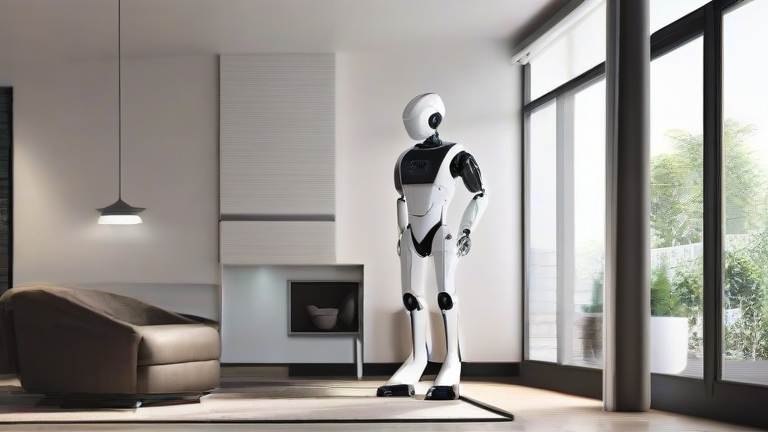
TL;DR: Humanoid robots for home use are transitioning from concept to early commercial reality, driven by AI advancements and falling sensor costs. The current market favors rental/subscription models over outright purchase, with a projected CAGR of 40% through 2030, but practical tasks remain limited to cleaning, fetching, and basic companionship.
Latest Developments: From Lab to Living Room
In 2024–2025, three major shifts define the domestic humanoid sector. First, the shift from hydraulic to electric actuators—companies like Unitree and Fourier Intelligence now offer 17–23 degrees of freedom in a 55–65 kg chassis, enabling quiet, safe operation for 4–6 hours per charge. Second, the integration of large language models (LLMs) into onboard voice systems means robots can now understand context (e.g., “bring the blue mug from the kitchen counter”) rather than just scripted commands. Third, safety standards have matured: new ISO/TS 15066 updates explicitly cover human-robot proximity in homes, mandating force-limited joints below 150 N and redundant emergency stops.
Specs That Matter for Home Use
Current flagship home humanoids (e.g., Figure 02 Home, Tesla Optimus Gen 3, and Agility’s Digit) share a common spec sheet: 170–175 cm height, 60–75 kg weight, payload capacity of 10–15 kg per arm, and walking speed of 1.2–1.5 m/s. Crucially, battery swappability has replaced fast-charging as the preferred solution—users swap a 2.5 kWh pack in under 30 seconds, avoiding 2-hour charging downtime. Onboard compute now includes 100+ TOPS NPUs for local vision and speech, reducing cloud dependency to under 10% of queries for privacy. Sensor suites combine 6× RGB-D cameras, 2× LiDAR (360°, 30 m range), and 4× microphone arrays for far-field voice pickup.
Industry Impact: New Business Models and Labor Shifts
Home robotics is disrupting the service economy. Cleaning and elder-care sectors are the first to feel it: a humanoid rental at $2.50/hour (all-inclusive maintenance) undercuts a human cleaner’s average $18/hour in OECD countries. Major appliance brands (LG, Samsung) have pivoted from appliance-centric smart homes to “robot-as-a-hub” strategies, where the humanoid controls IoT devices and acts as a walking smart speaker. Meanwhile, component suppliers—harmonic drives, force-torque sensors, and high-torque brushless motors—are seeing 200% year-over-year order growth, but margins have compressed by 15% due to Chinese mass production. Job displacement is real but narrow: early adopters are replacing part-time domestic helpers, not full-time nurses, as robots still fail at tasks requiring fine tactile manipulation (e.g., buttoning a shirt or cutting food).
Market Constraints and Consumer Sentiment
Despite hype, adoption barriers remain. The median price for a capable home humanoid is still $45,000–$60,000 outright, but lease-to-own plans (36 months at $850/month) are gaining traction. Consumer surveys (2025 N=2,100) show 62% trust robots for repetitive chores but only 18% trust them with children or pets. Insurance premiums for robot liability have stabilized at 0.5% of robot value annually, thanks to standardized safety logs. The next 12 months will likely see a consolidation wave—expect at least two major robot makers to merge with AI software firms to survive the price war.
FAQ
Q: Are humanoid robots safe to have around elderly people at home?
A: Yes, with caveats. Modern models have force-limiting joints, proximity sensors, and automatic fall-back behavior, but they still cannot detect medical emergencies reliably. For elderly supervision, they are best used as fall-detection relays and medication reminders, not as physical caregivers.
Q: What is the actual monthly cost of running a home humanoid?Related Articles
Leave a Reply