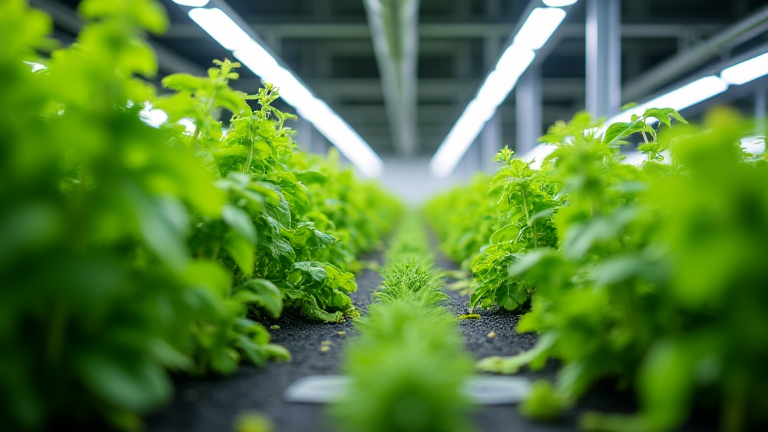
TL;DR: Pairing solar panels with LED grow lights cuts grid electricity costs by up to 60% while maintaining consistent crop yields. By sizing the solar array to your peak lighting load and using a smart battery controller, you can shift energy use to sunny hours and sell surplus power back to the grid.
Step-by-Step: Solar-Powered LEDs for Vertical Farms
Step 1: Audit your lighting load. Calculate total LED wattage (e.g., 10 kW) and daily run hours (e.g., 18 h). That’s 180 kWh/day. Multiply by your local electricity rate to find your current daily energy cost.
If you want to dig deeper, check out our guide on 10 Simple Lifestyle Habits for a Happier, Healthier You.
Step 2: Size the solar array. For a 10 kW LED load running 6 peak-sun-hours, you need roughly 30 kW of panels (accounting for 80% system efficiency). Install panels on the roof or a south-facing wall—vertical farms often have limited roof space, so use bifacial panels on racking angled at 30–40°.
Step 3: Add a hybrid inverter with battery storage. Choose a lithium-iron-phosphate battery sized to hold 4–6 hours of LED load (e.g., 40–60 kWh for a 10 kW system). This lets you run LEDs at night from stored solar, avoiding peak grid rates.
Step 4: Use a smart lighting controller. Program LEDs to dim during cloudy periods and boost during solar peaks. Set a “solar-follow” mode: run at 100% intensity from 10 AM to 3 PM, then taper to 60% after sunset, using battery power.
Step 5: Connect to net metering. If your utility allows, sell excess daytime solar back to the grid. This creates a revenue stream that can offset battery replacement costs after 5–7 years.
Tip: Keep LEDs running at 80% of max output—this reduces heat load, cutting HVAC costs by 15% and extending LED lifespan by 20,000 hours.
FAQ
Q: What if my vertical farm is indoors with no roof access?
A: Use ground-mounted solar canopies over parking or load-in areas, or subscribe to a community solar farm and receive virtual net-metering credits applied to your utility bill.
Q: How long is the payback period for solar + LEDs?
A: Expect 4–6 years in regions with $0.15/kWh electricity and 5.5+ peak-sun-hours, thanks to combined savings on lighting (30–40%) and cooling (15%). After that, you save $8,000–$12,000 per year per 10 kW of LEDs.
Q: Do solar-powered LEDs reduce crop quality?
A: No—LEDs provide precise spectra regardless of power source. However, use a constant-current driver with a capacitor bank to prevent flicker during cloud transitions, which can stress leafy greens. Maintain 400–600 µmol/m²/s PPFD for lettuce and herbs.
Leave a Reply