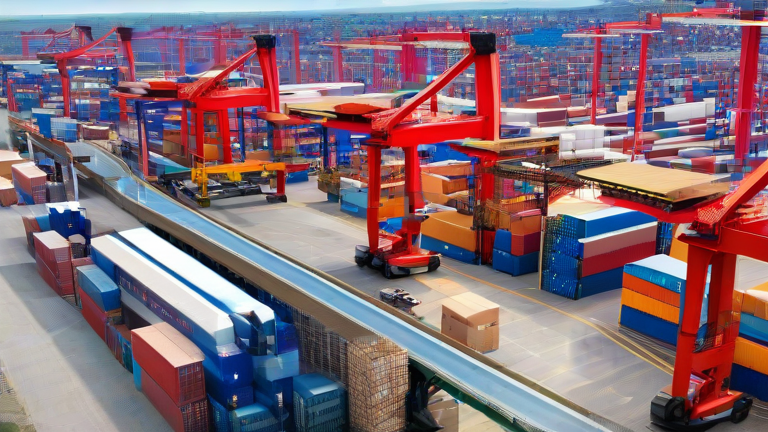
TL;DR: Reshoring is accelerating because pandemic shocks, geopolitical tensions, and rising logistics costs have exposed the fragility of extended global supply chains. Companies are now regionalizing production to gain resilience, cut lead times, and satisfy customers and regulators demanding local sourcing.
Market Analysis: The Numbers Behind the Shift
Reshoring has moved from boardroom talking point to capital allocation reality. According to the Reshoring Initiative, U.S. companies announced more than 300,000 manufacturing jobs tied to reshoring and foreign direct investment in a recent year—a record high and a sharp jump from a decade ago. In Europe, surveys by industry bodies show a majority of manufacturers have either relocated or plan to relocate some production closer to home. Consulting firms estimate that 15–25% of global trade in goods could shift to regional blocs by 2030 as companies reconfigure networks around North America, Europe, and Asia.
If you want to dig deeper, check out our guide on Neuroplasticity Apps: Fast-Track Skill Acquisition.
Several forces are converging. Freight volatility during the pandemic showed that ocean shipping a container across the Pacific could cost five times its normal rate—and still arrive weeks late. Geopolitical friction, tariffs, and export controls have added regulatory risk to long-distance sourcing. Meanwhile, automation, robotics, and digital manufacturing have narrowed the labor-cost gap that originally drove offshoring, making localized production economically viable for more product categories.
Strategy Insights: How Leaders Are Regionalizing
Successful regionalization is not a wholesale reversal of globalization; it is a selective redesign. Companies are segmenting their product portfolios—keeping high-volume, price-sensitive goods in low-cost regions while moving high-mix, high-velocity, or strategically sensitive items closer to customers. Many adopt a “China plus one” or “multi-local” model, maintaining capacity in several regions to hedge risk rather than betting on a single location.
Three practices distinguish effective programs. First, network modeling: leaders use digital twins and scenario planning to quantify total landed cost, including inventory, lead time, and disruption risk—not just unit price. Second, supplier co-location: manufacturers are recruiting key suppliers to industrial clusters, shortening inbound logistics and improving collaboration. Third, workforce investment: companies are partnering with technical colleges and launching apprenticeships to secure the skilled labor that reshored plants require. Executives who treat reshoring as a one-time move often stumble; those who build continuous network-optimization capability capture lasting advantage.
Case Studies: From Theory to Practice
A major U.S. appliance manufacturer consolidated several offshore component lines into a new plant in the Midwest, cutting lead times from over eight weeks to under two and reducing expedited-freight spend by double digits. A European automotive supplier opened a battery-component facility near its assembly customers, trimming inbound inventory by 30% while meeting new local-content rules. And a mid-sized electronics firm shifted final assembly for its fastest-moving SKUs to a nearshore site in Mexico, improving order-to-delivery performance enough to win a national retail contract. Each case shares a common thread: regionalization was justified by service and resilience gains, not simply labor arbitrage.
FAQ
Q: Is reshoring the same as regionalization?
A: Not exactly. Reshoring means bringing production back to a company’s home country; regionalization is broader, placing capacity anywhere within a nearby region—such as Mexico for U.S. firms or Eastern Europe for Western European companies.
Q: Does reshoring always raise costs?
A: Not necessarily. While unit labor costs may be higher, total landed cost often falls when freight, tariffs, inventory carrying costs, and lost-sales risk are included—especially for fast-moving or bulky products.
Q: Which industries are moving fastest?
A: Electronics, automotive and EV components, pharmaceuticals, semiconductors, and appliances lead the shift, driven by supply-security concerns, government incentives, and local-content regulations.
Leave a Reply