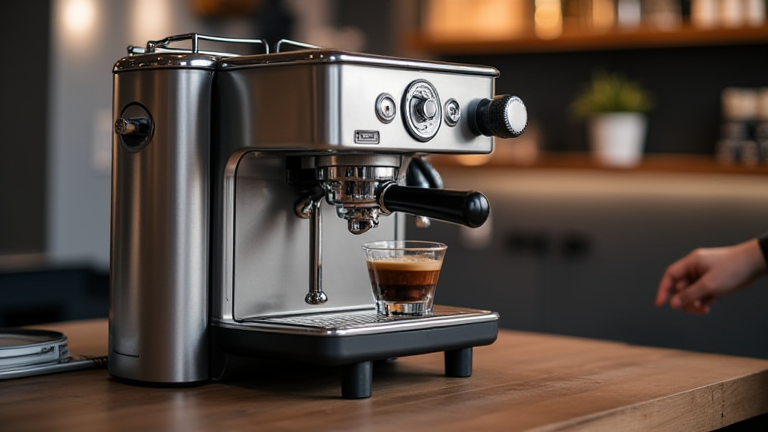
TL;DR: The best espresso machine for you balances budget, automation, and grind quality—not just brand prestige. For most home users, a semi-automatic machine with a built-in burr grinder and PID temperature control offers the best value and consistency.
Feature Highlights: What Actually Matters
When comparing espresso machines, ignore flashy dials and focus on three core features. First, pressure stability—look for a 9-bar pump with an OPV (over-pressure valve) to avoid bitter, over-extracted shots. Second, temperature control: a PID (proportional-integral-derivative) controller keeps water at exactly 200°F, which is non-negotiable for pulling bright, balanced espresso. Third, steam wand power—a commercial-style wand with a ball joint and anti-burn tip lets you texture milk for latte art, while a basic panarello wand only produces frothy foam.
If you want to dig deeper, check out our guide on Real-Time Wearable Biosensors Detect Early Disease Markers.
Comparison: Budget vs. Prosumer vs. Super-Automatic
Budget ($200–$400): Machines like the DeLonghi Stilosa lack PID but offer a 15-bar pump. They work best with pre-ground coffee, but you’ll sacrifice nuance. Prosumer ($500–$1,200): The Breville Barista Express (with integrated grinder) and Rancilio Silvia (separate grinder required) dominate this tier. The Breville wins on convenience, while the Silvia wins on durability and upgradability. Super-automatic ($1,500+): Machines like the Jura E8 grind, tamp, and brew with one button. They are perfect for busy households but produce slightly less crema and require costly descaling maintenance.
Another key comparison: single boiler vs. dual boiler vs. heat exchanger. Single boilers (budget) force you to wait between brewing and steaming. Heat exchangers (mid-range) let you steam and brew simultaneously but require temperature surfing. Dual boilers (prosumer) offer independent control—ideal for back-to-back milk drinks.
Call-to-Action: Make the Leap Today
Don’t overthink it. If you drink straight espresso, a $600 semi-auto with PID will outperform a $2,000 super-auto. If you only drink milk drinks, prioritize steam power over grinder quality. Start with a machine that has a 58mm portafilter (industry standard) and a 3-year warranty. Upgrade your grinder before your machine—it’s the single biggest flavor improvement.
Ready to brew? Compare three models side-by-side at your local kitchen retailer, or read verified user reviews on specialty coffee forums. Set a realistic budget, buy once, and enjoy café-quality shots at home for years.
FAQ
Q: Is a built-in grinder worth it, or should I buy a separate one?
A: A built-in grinder is fine for beginners, but it often uses stepped adjustments and produces more static. A separate burr grinder (e.g., Baratza Sette 270) gives finer control and easier cleaning—worth it if you drink espresso daily.
Q: How often should I descale my espresso machine?
A: Every 3–6 months, depending on water hardness. Use a descaling solution (citric acid-based) and run it through the water reservoir. If you use filtered water, extend to 6–8 months. Never use vinegar—it can corrode seals.
Q: Can I use pre-ground coffee in a semi-automatic machine?
A: Yes, but expect a 30–40% drop in flavor. Pre-ground coffee goes stale within 15 minutes of grinding. For best results, buy whole beans and grind right before pulling your shot—aim for a fine, powdery consistency that clumps slightly when pressed.
Leave a Reply