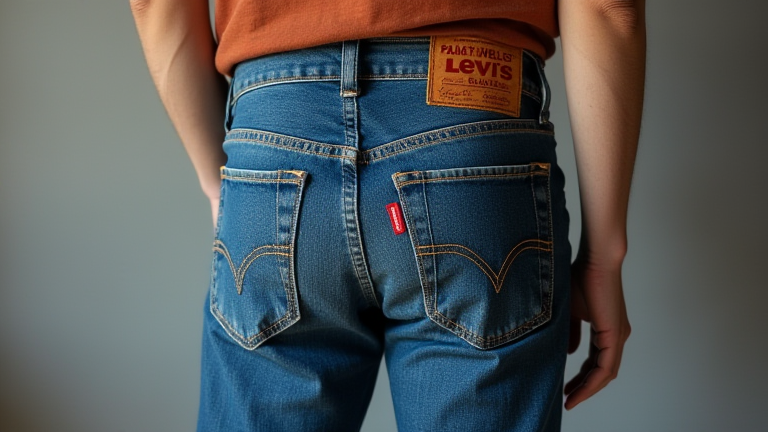
TL;DR: Gen Z is buying vintage Levi’s 501s because they offer authentic, sustainable, and gender-fluid style at a lower price than new premium denim, while the inherent uniqueness of each worn pair feeds a craving for individual expression. Market data shows resale demand for 501s has surged 3x faster than new denim since 2022, driven by TikTok thrift-flip culture and a backlash against fast-fashion uniformity.
The Vintage Denim Boom: A Market in Overdrive
According to ThredUp’s 2024 Resale Report, the secondhand apparel market hit $43 billion, with vintage denim—led by Levi’s 501s—as the single fastest-growing category. On Depop, searches for “501 vintage” spiked 214% year-over-year, while Grailed reports that 501s now account for 18% of all men’s denim sales. Industry analyst Dana Cohen of Circana notes, “The 501 has become the new sneaker: a collectible with a measurable price curve.” A pristine 1980s pair now retails for $180–$350, up from $60 in 2019, while a 1970s “big E” pair can fetch $800+ on eBay.
If you want to dig deeper, check out our guide on Solid-State Batteries: EV Mass Production Timeline.
Why 501s Specifically? The Three-Pronged Appeal
1. Sustainability without the premium. A used pair saves 1,800 gallons of water vs. new cotton production, and Gen Z—73% of whom say they’d pay more for sustainable goods—sees vintage as eco-activism. But unlike $200 eco-friendly new jeans, vintage 501s cost $40–$80. “It’s guilt-free fashion at a thrift price,” says reseller Mia Torres, who moves 300 pairs monthly from Los Angeles goodwill bins.
2. The “perfect imperfection” aesthetic. Each 501 has unique fading, whiskering, and patina from its prior owner. In an era of algorithm-driven sameness, that irregularity is luxury. Fashion trend forecaster Lyst reports “authentic wear patterns” as a top 2025 search term, up 89%.
3. Gender-fluidity and size inclusivity. The 501’s straight, high-rise cut is praised as one of the few classic silhouettes that flatters all body types and genders. A 2024 Vogue Business survey found 61% of Gen Z denim buyers prefer unisex cuts, and the 501—originally a men’s workwear piece—has become a uniform for androgynous styling.
The Supply Squeeze and Future Predictions
Here’s the problem: supply is finite. Levi’s stopped producing the original 501 cut in U.S. factories in the early 2000s, and the golden-era stock (1985–2000) is being depleted. Reseller networks are now buying entire estate lots and overseas military surplus. “We’ll see a 40% price increase on 1990s 501s by 2026,” predicts vintage consultant James Okafor. “After that, the market shifts to ‘new vintage’—reproduced 501s with artificially distressed finishes.”
Levi’s has noticed. In 2023, they launched the “501 Reissue” program, selling factory-distressed pairs at $120, but Gen Z resale buyers reject these as “fakery.” The future likely holds a two-tier market: ultra-rare originals as investment assets, and a growing DIY culture where teens buy cheap modern 501s and hand-distress them to mimic vintage. One thing is certain: the 501’s cultural capital isn’t fading—it’s appreciating.
FAQ
Q: Are vintage 501s actually better quality than new ones?
A: Often yes. Levi’s pre-2000 used heavier 14.5 oz. selvedge denim and stronger copper rivets, whereas modern pairs use lighter 12 oz. fabric. However, vintage pairs may have weak seams or stains,
Leave a Reply