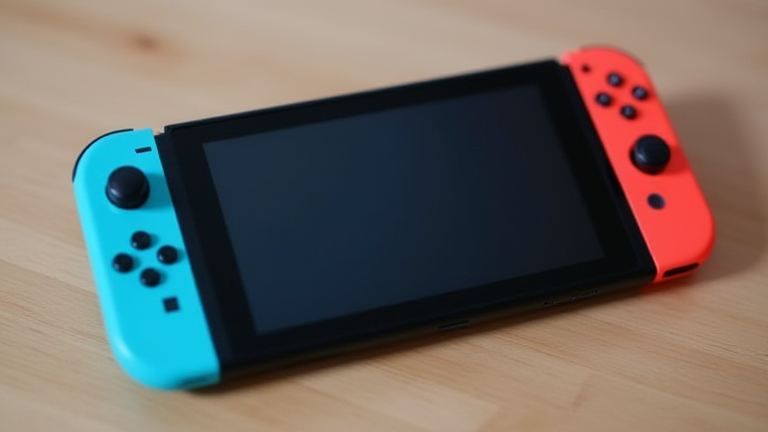
TL;DR: The Nintendo Switch OLED remains the best portable console because its vibrant 7-inch OLED screen, mature game library, and hybrid flexibility still outclass rivals in real-world play. Newer handheld PCs may push more pixels, but none match its balance of price, battery life, and pick-up-and-play simplicity.
When the Switch OLED launched in October 2021, skeptics called it a modest refresh. Nearly four years later, that “modest refresh” has become the definitive way to play on the go. While Sony’s PlayStation Portal streams only from a PS5 and Valve’s Steam Deck caters to tinkerers, the Switch OLED quietly delivers what most players actually want: instant, polished gaming anywhere.
If you want to dig deeper, check out our guide on Why the Quiet Luxury Sneaker Trend Is Taking Over.
Latest Developments Keep the Platform Relevant
Nintendo’s 2024 and 2025 release cadence has been unusually strong for a console this late in its life. The Legend of Zelda: Echoes of Wisdom, Super Mario Party Jamboree, and Metroid Prime 4: Beyond all run on the OLED’s hardware, and the system’s install base—over 146 million units sold—continues to attract indie and third-party support. Backward compatibility chatter around the successor console has also boosted OLED sales, as buyers scoop up a proven device at a discount rather than wait for launch-day scarcity.
Specs That Still Make Sense
The headline feature is the 7-inch OLED panel: 1280×720 resolution with per-pixel lighting, producing contrast and color saturation that LCD-based rivals can’t touch. Add a wide adjustable stand, a 64GB internal storage bump, enhanced speakers, and a wired LAN dock port, and you have a machine tuned for handheld comfort rather than spec-sheet bragging. Battery life lands around 4.5 to 9 hours depending on the title—far beyond most Windows handhelds running demanding games. The custom Nvidia Tegra X1 may be aging, but Nintendo’s first-party art direction wrings every ounce from it.
Industry Impact
The OLED model proved that display quality, not raw horsepower, drives perceived premium value in portables. It also cemented the hybrid form factor as the industry default—the Steam Deck, ROG Ally, and Legion Go all follow the template Nintendo popularized. Meanwhile, the OLED’s sustained sales have extended the Switch’s lifespan well past the typical seven-year cycle, giving Nintendo rare leverage heading into its next generation.
Competitors will keep shipping faster chips. But speed isn’t why people carry a console in their bag. The Switch OLED wins on screen, library, and frictionless fun—and that’s why it still sits at the top.
FAQ
Q: Is the Switch OLED worth buying in 2025 with a successor rumored?
A: Yes, if you want a proven library and great screen now; wait only if you specifically need next-gen performance.
Q: How does the OLED screen compare to the original Switch?
A: The OLED offers deeper blacks, richer colors, a larger 7-inch size, and better contrast, though resolution stays at 720p.
Q: Can the Switch OLED play the same games as other Switch models?
A: Yes—it runs the full Switch library, and most games perform identically, with the OLED simply looking better in handheld mode.
Leave a Reply