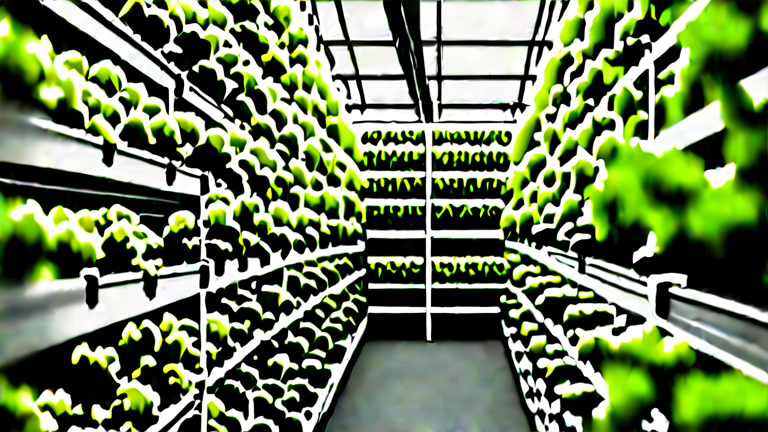
TL;DR: Urban vertical farming grows produce in stacked, climate-controlled city facilities, slashing food miles from thousands of kilometres to just a few. It won’t replace conventional agriculture, but it is becoming a commercially viable supplement for leafy greens and herbs in dense metros.
Food’s journey to the plate is getting shorter. With roughly 55% of the global population living in cities—a figure the UN expects to reach 68% by 2050—feeding urban centres through traditional supply chains is increasingly costly and carbon-intensive. Vertical farms, which stack hydroponic growing trays under LED lighting in warehouses and rooftops, offer a radical alternative: production within city limits, often just kilometres from consumers.
If you want to dig deeper, check out our guide on Why Solid Wood Furniture Is the Interior Design Trend to Wat.
A Fast-Growing Market
The numbers tell a story of rapid expansion. According to Allied Market Research, the global vertical farming market was valued at approximately $5.6 billion in 2023 and is projected to reach $41.4 billion by 2032, growing at a compound annual growth rate of around 25%. Europe and North America lead adoption, but Asia-Pacific is the fastest-growing region, with Singapore—which imports over 90% of its food—targeting 30% local production by 2030.
The core appeal is logistics. A head of lettuce flown or trucked into a major city can travel 2,500 kilometres or more. A vertically farmed equivalent may travel fewer than 10. That compression cuts transport emissions, reduces spoilage, and lets growers harvest to order—often within 24 hours of purchase.
Expert Insights
Industry analysts caution against overhyping the sector. “Vertical farming is not a silver bullet for food security,” says Dr. Esther Kim, an agricultural economist and consultant to the sector. “It works brilliantly for high-value, fast-turnover crops—greens, herbs, berries—but staple calories like wheat and rice remain far more economical in open fields.”
Operators agree that economics, not ideology, will decide winners. Energy costs can consume 40–50% of operating budgets, making efficiency gains in LED lighting and HVAC systems the sector’s central battleground.
What’s Next
Analysts expect consolidation as smaller players struggle with capital costs, while well-funded operators scale into modular “farm-in-a-box” systems that can be deployed in unused retail space and basements. Integration with AI-driven climate optimisation and renewable energy contracts will likely define the next five years. The realistic outlook: vertical farms supplying 10–20% of perishable produce in leading cities by the mid-2030s—modest in volume, but transformative in supply-chain resilience.
FAQ
Q: Are vertically farmed crops more sustainable than field-grown ones?
A: For leafy greens in cold climates, yes—shorter transport and zero pesticides typically outweigh energy use. For crops that grow well outdoors year-round, conventional farming usually wins on total emissions.
Q: Why can’t vertical farms grow staples like wheat?
A: Staple grains need vast acreage and sunlight at a cost per calorie that indoor lighting cannot match. Vertical farms succeed with premium, perishable crops where freshness and proximity command higher prices.
Q: Will vertical farming make cities fully self-sufficient?
A: No. Realistically, it can supply a meaningful share of perishable produce—perhaps 10–20% in leading cities by the mid-2030s—but cities will continue to rely on regional and global supply chains for most calories.
Leave a Reply